Why I’ll Never Go Back To The Bag
If someone had told me five years ago that I’d be milling my own flour at home, I would have laughed. I was a bakery owner. I knew flour. I had strong opinions about flour. And all of my opinions came from the stuff in the bag at the grocery store.
Then I got sick. Not dramatically, not all at once, but slowly and persistently in the way that makes you think something is just wrong with you. I spent almost a decade avoiding gluten, convinced wheat was the enemy, before I found Sue Becker at Bread Beckers. What she shared stopped me cold. The problem wasn’t wheat. It was what we had done to it.
That discovery changed everything in my kitchen, and honestly, a lot more than that.
So What Actually Is Fresh Milled Flour?
Fresh milled flour is exactly what it sounds like: flour that is ground right before you use it, straight from whole wheat berries.
When you mill wheat at home, you keep the entire kernel intact. The bran, the germ, the endosperm, all of it. That means you keep the fiber, the natural oils, the vitamins, and the minerals that are present in the grain the way God designed it. You grind it fresh, you bake with it, and your body gets 40 of the 44 nutrients it needs to sustain life..
Store-bought flour, even most whole wheat flour, is not that. Not by a long shot.
A Little History…
For most of human history, people milled and baked with whole grain flour. It was normal, it was nourishing, and nobody thought much about it. Then came the industrial revolution and the invention of the roller mill in the late 1800s, which changed everything.
Roller milling made it possible to strip out the bran and the germ quickly and efficiently, leaving behind just the starchy white endosperm. The result was a fine, shelf-stable white flour that could be shipped and stored without spoiling. Millers loved it. Merchants loved it. Consumers wanted the cheap, fluffy white bread they didn’t have to worry about going bad as quickly.
What nobody was paying attention to was what got left on the mill room floor.
By the early 1900s, nutritional deficiency diseases were showing up in alarming numbers across the United States and other countries eating a lot of refined flour. Pellagra. Beriberi. Anemia. These are diseases caused by severe deficiencies in B vitamins and iron. Nutrients that are naturally present in whole wheat but removed when you strip the bran and germ away.
The solution the food industry landed on was not to stop stripping the wheat. They were making a profit by selling the bran and germ to livestock feeders. The solution was to add some of those nutrients back in, synthetically, after the fact. That is where enriched flour comes from. They take out what was there naturally, then add back a fraction of it in a form your body may not absorb as well, and call it enriched.
Folic acid was added to enriched grain products in the United States in 1998, required by the FDA to help reduce neural tube defects. That mandate came after decades of research showing widespread folate deficiency in women of childbearing age, a direct result of diets built around refined grains. The solution, again, was to enrich rather than restore.
We have been eating this way for over a hundred years, and most of us have never known anything different.
Is Fresh Milled Flour the Same as Whole Wheat Flour?
No, and this is one of the most common questions I get.
The whole wheat flour at the grocery store starts as a whole grain, but it was milled commercially, often a long time before it reached your cart. Once wheat is milled, the oils in the germ begin to oxidize and degrade. Most commercial whole wheat flour has been sitting in a bag, in a warehouse, and on a shelf for weeks or longer before you bake with it. Much of the nutritional value has already declined, and the flavor has started to turn a little stale and bitter, which is part of why a lot of people do not love the taste of whole wheat baked goods.
Fresh milled flour is different because you grind it right before you use it. The nutrients are still intact, the oils are still fresh, and the flavor is something else entirely. It is slightly sweet, a little nutty, and complex in a way that bagged flour just is not.
What Kind of Wheat Berries Can You Use?
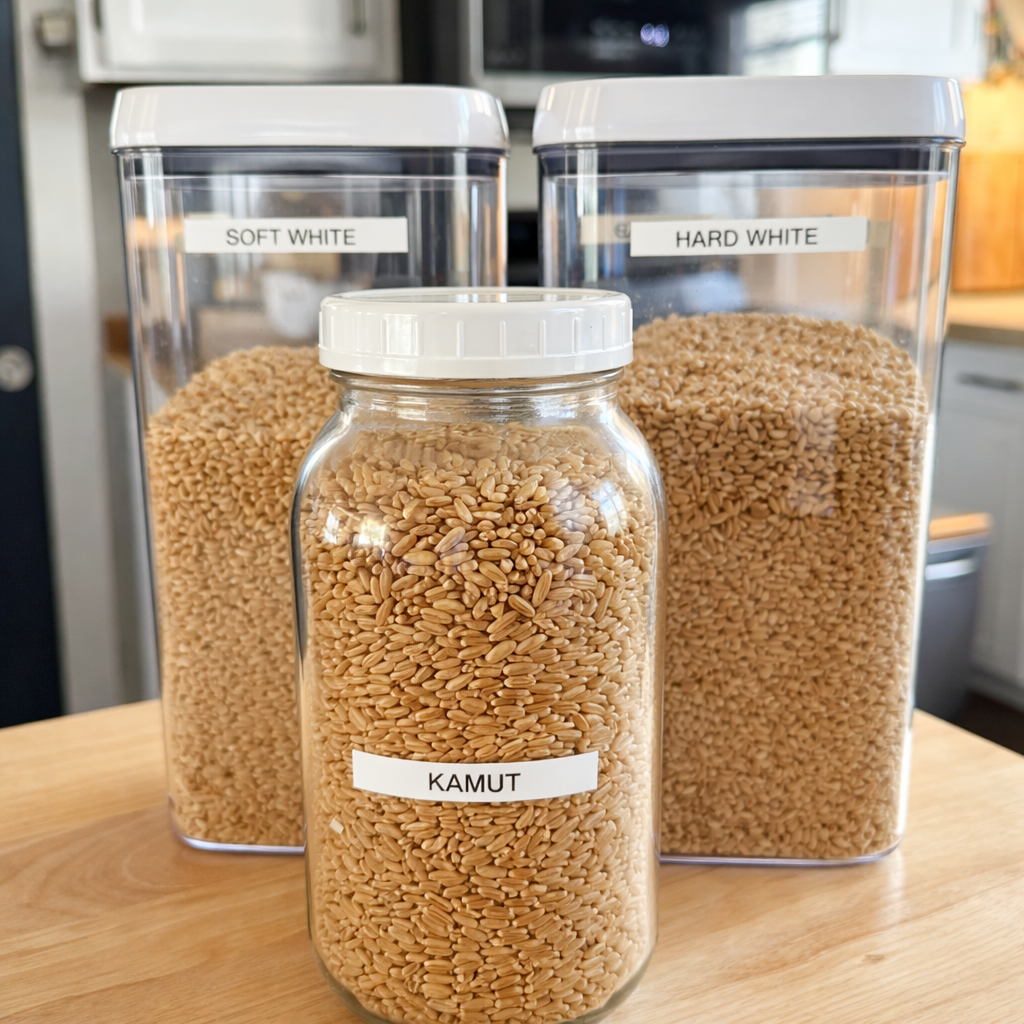
This is the fun part. There are several types of wheat berries, and they each behave a little differently in baking.
Hard red and hard white wheat are what most people start with for bread baking. Hard white is milder and lighter in color, which makes it a great starting point if you are nervous about your family noticing a change. Hard red has a slightly more robust, wheaty flavor and is excellent for heartier loaves.
Soft wheat varieties are lower in protein and work better for pastries, biscuits, cakes, and quick breads where you want a tender crumb.
Beyond modern wheat, there is a whole world of ancient grains. Einkorn, emmer, spelt, and Khorasan wheat are all older varieties that were largely replaced by modern hybridized wheat during the 20th century. Many people who struggle with modern wheat find they tolerate ancient grains much better, though they do behave differently in recipes. Einkorn in particular has a devoted following, and it deserves every bit of that reputation.
Do You Need a Fancy Setup to Get Started?
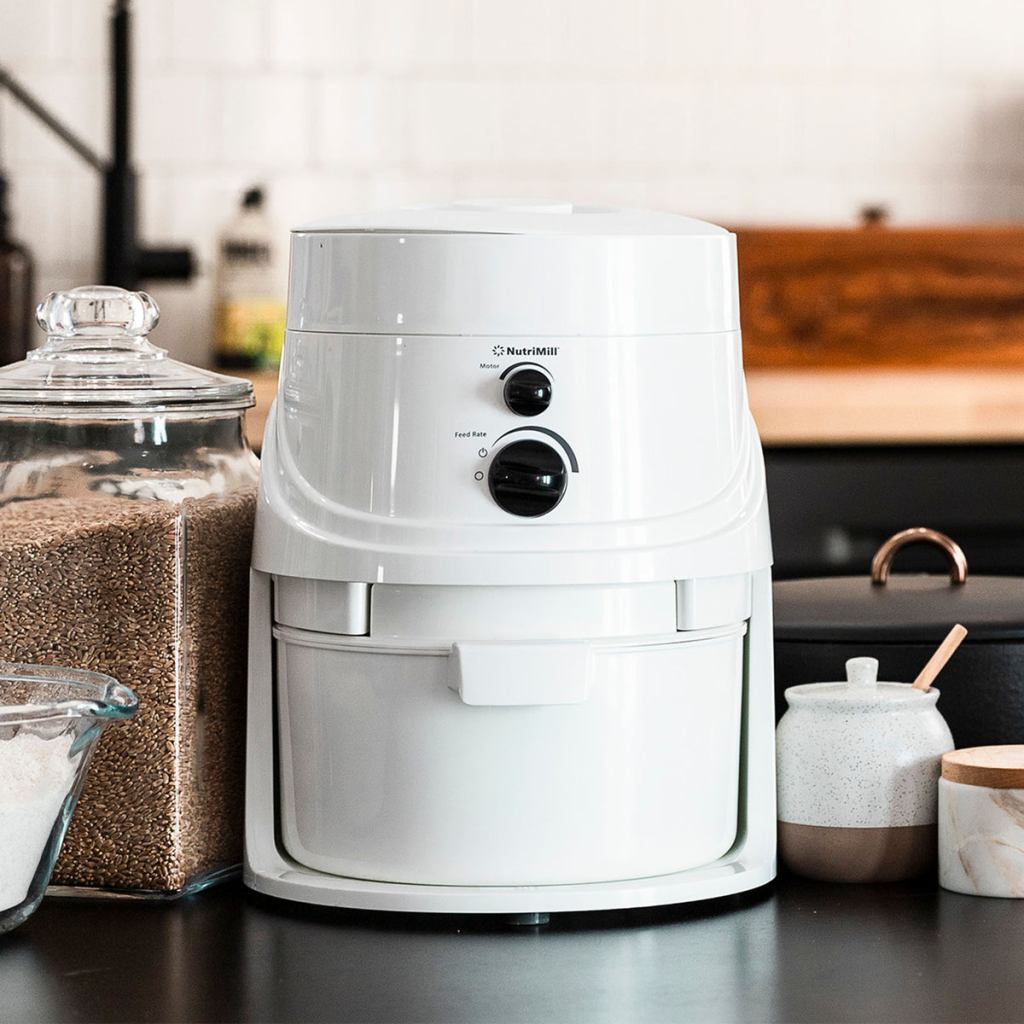
You do not. I use a NutriMill Classic, and I love it. But there are smaller, more affordable grain mills out there, and some people even start with a high-powered blender to see if fresh milled flour is something they want to commit to before investing in a mill.
The equipment doesn’t have to be complicated. It really doesn’t.
Does It Have to Be All or Nothing?
For me, personally? Yes. Once I understood what I was missing and experienced the difference it made in my own body, going halfway wasn’t an option. I can’t tolerate commercial flour and do not want to go back to being gluten free. I use fresh milled flour for everything now.
But that is my story, not a requirement.
Plenty of people start by swapping out one recipe, or milling flour for their bread while still keeping a bag of all-purpose for other things. That is completely valid. Any step toward whole, nourishing food is a good step.
What I will say is this: if you do decide to commit fully to fresh milled flour, I don’t think you will regret it. It does not add as much time to your baking as you might expect, and the payoff in flavor and nutrition is real.
The Community That Made It Click for Me
One thing I wish I had known earlier is that you do not have to figure this out alone. When I was just getting started, Facebook groups were genuinely one of my best resources. There are whole communities of home millers and fresh flour bakers sharing tips, troubleshooting dense loaves, and cheering each other on. If you ever have a question, someone has already asked it, and someone kind has already answered it.
This world has some of the most generous, helpful people I have come across in any cooking community. Do not be shy about jumping in.
A Word On Why This Matters Beyond The Kitchen
I want to be honest with you. For me, this is not just about nutrition or flavor, as much as I care about both of those things.
There is something in Colossians 3:23 that I keep coming back to: “Whatever you do, work at it with all your heart, as working for the Lord, not for human masters.” That verse has shaped the way I think about homemaking, about cooking, about the care I put into feeding my family. When I mill flour and bake a loaf of bread from scratch, I am doing something intentional. I am stewarding what I have been given. That feels like an act of faithfulness to me, not a burden.
Where Do You Even Start?
Here is my honest advice: start with one recipe. Not five, not a whole overhaul of your kitchen. One recipe.
A simple sandwich loaf or a banana bread made for fresh milled flour is a great place to begin. Master that one thing, get comfortable with how the flour feels and how your oven responds, and then branch out from there.
And if your first loaf comes out dense? Welcome to the club. We still ate ours. It is part of the process, and I promise it gets easier fast.
If you are curious and want a gentle place to begin, I put together a free beginner’s guide with everything I wish I had known when I started. You can grab it right HERE.
I am so glad you are here.
Shannon
 Stewarding Faithfully
Leave a comment