
The Fresh-Milled Sourdough Breakthrough I Worked Months to Achieve
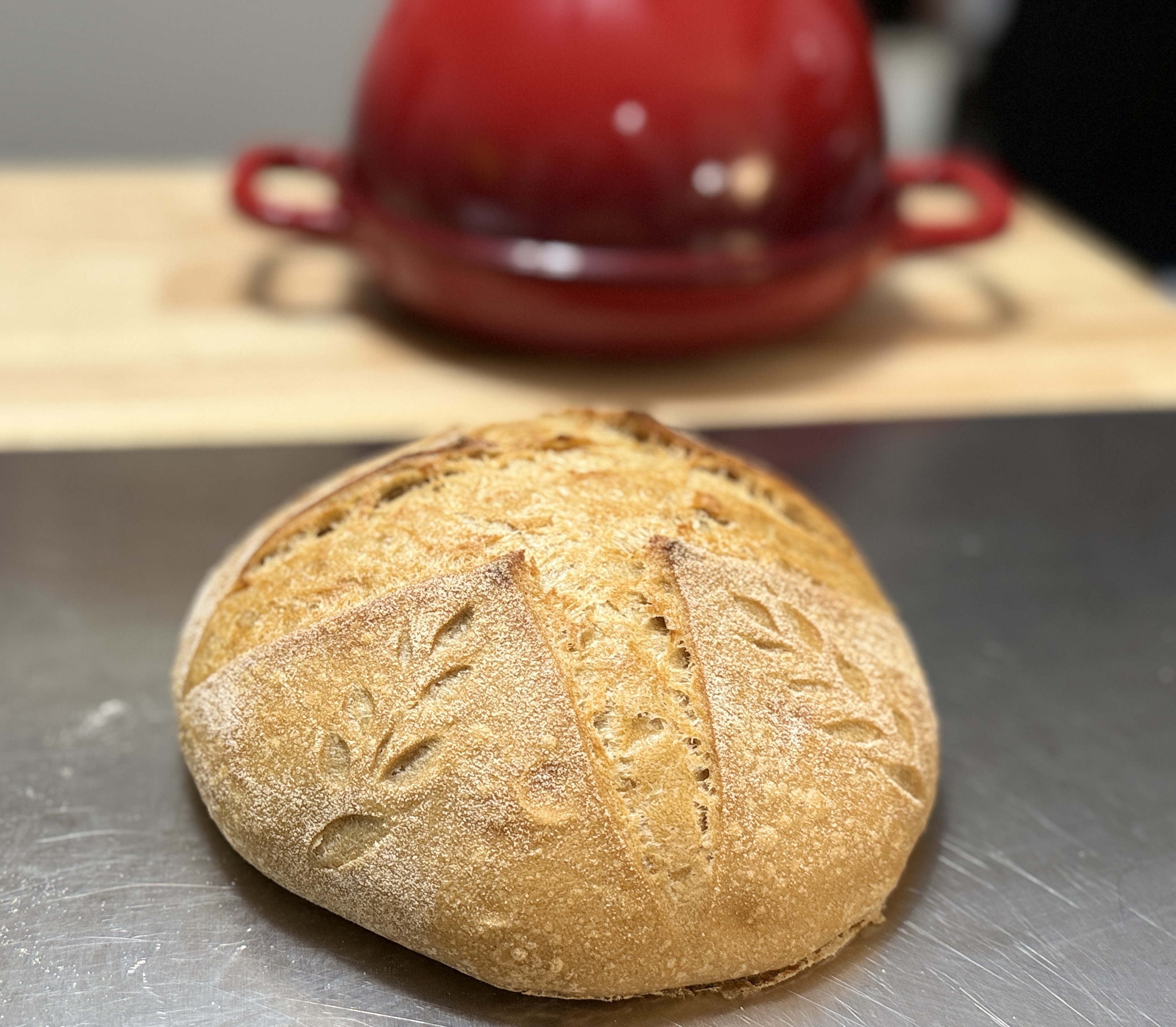
After months of testing, tweaking, troubleshooting, and more than a few disappointing crumb shots, I finally baked the fresh-milled sourdough loaf I’d been chasing.
If you’ve ever switched wheat suppliers, struggled with dense loaves, or wondered why your dough doesn’t behave like everyone else’s on social media, this post is for you.
The good news? I didn’t need commercial flour, vital wheat gluten, or fancy additives. Just fresh-milled flour, patience, and a few adjustments that made all the difference.
What Changed?
For months, I was getting beautiful loaves on the outside, but the crumb was still denser than I wanted. The dough often felt weak, fermentation was difficult to judge, and the results weren’t consistent.
This loaf was different.
1. I sifted out the coarsest bran.
After milling 500g of hard white wheat, I sifted the flour twice. Surprisingly, I only removed about 15g of bran. That small amount seemed to make a difference in dough handling without removing the character and nutrition of fresh-milled flour.
2. I hydrated the flour overnight.
After sifting, I mixed the flour and water and placed it in the refrigerator overnight. This allowed the flour to fully hydrate before fermentation began.
3. I used a strong, mature starter.
I fed my starter to a thick pancake batter consistency and allowed it to peak before refrigerating overnight.
4. I kneaded the dough in my mixer.
I wanted to make sure I had really good gluten development up front. And to be honest, it just saved time. So I kneaded the dough in my Bosch mixer to a windowpane. Then transferred to a clear bowl for bulk fermentation.
5. I finally trusted the aliquot jar.
Instead of guessing when bulk fermentation was finished, I used an aliquot jar to track the dough’s rise. The dough doubled in the jar before I shaped it.
What Is an Aliquot Jar?
An aliquot jar is simply a small container that holds a tiny sample of your dough during bulk fermentation. Mark the starting level and keep it beside your dough. (I set mine in the middle of the dough under my bowl cover.) As the dough rises, the sample rises too, giving you a clear picture of fermentation progress.
For this loaf, waiting until the dough doubled in the aliquot jar was one of the biggest breakthroughs in the process.
I find my dough takes about 6 hours from mixing to shaping. This, of course, depends on dough temp, room temp, humidity, season (heat on or air conditioning), etc. Watch the aliquot jar not the clock.

Affiliate Disclosure: This post contains affiliate links, which means I may earn a small commission at no extra cost to you if you make a purchase through my links. I only recommend products I personally use and trust. Thank you for supporting Stewarding Faithfully!
Equipment
Use Code STEWARDINGFAITHFULLY for $20 off Nutrimill products.


Fresh Milled Sourdough Bread
Ingredients
- 500 g hard white wheat
- 375 g water
- 125 g active starter
- 10 g salt
Instructions
The Night Before
- Mill 500g wheat berries
- Sift the flour twice, removing the coarsest bran particles.
- Mix the flour with 375g water until fully combined. Cover and refrigerate overnight.
- Feed your starter and allow it to peak. Refrigerate until morning.
The Next Morning
- Remove the flour and water mixture from the refrigerator
- Add 125g of active starter and 10g salt
- Mix until incorporated
- If using a stand mixer, knead to a windowpane
- If mixing by hand, mix until incorporated and perform a series of stretch and folds or coil folds every 30 minutes during the first few hours of bulk fermentation to build strength.
Bulk Fermentation
- Place the dough into a lightly oiled container and start an aliquot jar.
- Keep the dough around 75–78°F.
- Continue stretch-and-folds or coil folds as needed if you didn't mix in a stand mixer up front during the early stages of bulk fermentation.
- Allow the dough to ferment until the aliquot jar doubles.
- Trust the dough, not the clock.
Shape and Proof
- Turn the dough onto a lightly floured surface.
- Pre-shape and allow a short bench rest.
- Shape into a boule and place seam-side up in a prepared banneton.
- Cold proof in the refrigerator for several hours.
Bake
- Preheat a Dutch oven to 450°F.
- Turn the dough onto parchment paper, score, and bake covered for 30 minutes.
- Remove the lid and continue baking until deeply golden and the internal temperature reaches approximately 205°F.
- Cool completely before slicing.

What I Learned
Fresh-milled sourdough doesn’t always behave like dough made with commercial flour.
The biggest lesson from this bake was learning to trust fermentation. The dough felt tacky and softer than I expected, but once it doubled in the aliquot jar it became airy, bubbly, easy to shape, and produced the crumb I had been trying to achieve for months.
Sometimes the answer isn’t adding more flour or changing the recipe. Sometimes the answer is simply giving the dough enough time.
Final Thoughts
This loaf wasn’t luck. It was the result of months of experimenting, taking notes, and learning how fresh-milled flour behaves.
I have repeated this process again and again and now I officially call it my go-to recipe.
If you’re struggling with dense fresh-milled sourdough, don’t give up. The breakthrough may be closer than you think.


Leave a Reply